Median Year-1 federal savings: $47,298 · IQR $38,495–$47,729

Gatlinburg, TN cost segregation: what 5 representative properties actually produce

Engine-derived ROI benchmarks for Gatlinburg-area short-term rentals, single-family rentals, and small commercial properties. Numbers come from running real fixtures through the Cost Seg Smart engine — same engine that produces your actual study. Studies from $495.

Operated by Cost Seg Smart. Studies are IRS-aligned, audit-defense-included. 5 fixture benchmarks computed May 2026.

The Gatlinburg numbers, distilled

$47,298
Median Year-1 federal savings (100% bonus, 37% bracket)
Interquartile range: $38,495 – $47,729
26.7%
Median reclassification ratio
IQR: 25.9% – 27.0% · Full range: 17.4% – 27.2%
20.3%
Median land allocation
IQR: 20.2% – 20.5%
5
Representative fixtures
Spanning 5 Gatlinburg sub-markets

Numbers above are engine-estimated outputs from running 5 representative fixtures — not promises about what your specific property will produce. Results vary based on actual property condition, year built, renovation history, county assessor data quality, and rental treatment (STR vs LTR). Full per-fixture table, neighborhood breakdown, and downloadable CSV/PDF on the Gatlinburg cost seg benchmarks page.

Why Gatlinburg is different

Gatlinburg is consistently ranked among the top three short-term-rental markets in the United States by revenue, and the cost-segregation case for a Sevier County cabin is one of the strongest in the country for three reasons that don't apply to most STR destinations.

Tennessee's zero state income tax is the structural advantage. No state addback on federal §168(k) bonus depreciation, no decoupling math, no Schedule X reconciliation — the federal deduction is the entire tax-savings calculation. A Gatlinburg owner taking $80,000 of accelerated reclassification at the 37% federal bracket captures roughly $29,600 in real first-year tax savings, with no state-side leakage. Compare to a California owner doing the same study on a Big Bear property: California's §168(k) decoupling claws back roughly $10,600 of that on the state addback.

The property archetype is unusually cost-seg-friendly. A furnished Gatlinburg STR cabin in the $500K–$1.1M range typically has heavy FF&E density (sleeps-10+ layouts, themed décor, multiple hot tubs, game rooms, full kitchens designed for family rentals, smart-home tech), substantial 15-year land-improvement work (deck systems, gravel drives, fire pits, hardscape), and post-2015 build dates that mean RSMeans 2024-equivalent construction costs don't need heavy PPI back-adjustment. The engine routinely produces 22–32% reclassification ratios on Gatlinburg cabins — at the high end of what residential cost seg supports.

The buyer profile is unusually sophisticated. Gatlinburg is a portfolio market — most owners are running 3–12 cabins, frequently from out of state. They underwrite on cap-rate-net-of-tax-savings, and they're comparison-shopping across providers. Pricing transparency wins here.

Tennessee state tax position: Tennessee has no state income tax — the Hall Tax on interest and dividends was fully repealed effective tax year 2021. Federal cost segregation deductions are the entire tax story for Gatlinburg STR owners. There's no state addback, no decoupling math, no Schedule X reconciliation. Combined with 100% federal bonus depreciation under OBBBA, this is the cleanest state position for cost-seg in the United States.

Verify with your CPA. State tax conformity rules for federal §168(k) bonus depreciation are adjusted frequently — multiple states have modified their treatment two or more times in the past decade. The general framing on this page reflects our understanding as of May 2026, but you should always verify current-year treatment with a qualified CPA or tax attorney before relying on specific dollar projections for your situation.

Engine outputs: 5 Gatlinburg fixtures

These aren't rough estimates. Each fixture was run through the same engine that produces your actual study — RSMeans 2024 base costs, BLS PPI time index, county assessor land allocation, IRS Pub. 946 / Rev. Proc. 87-56 MACRS classification, 100% bonus depreciation per OBBBA.
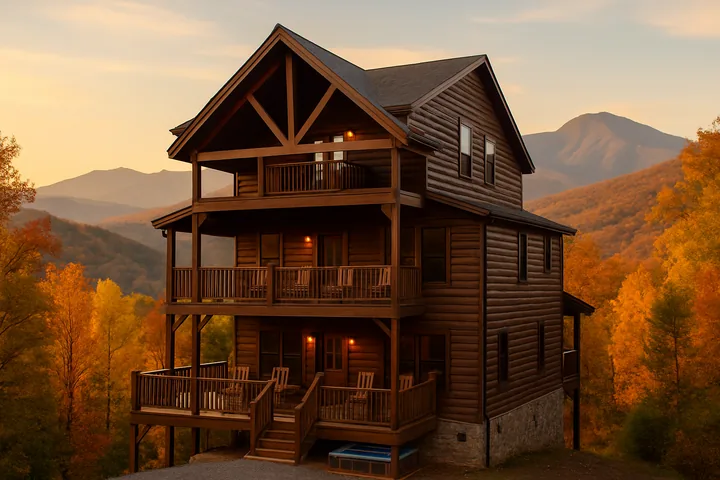
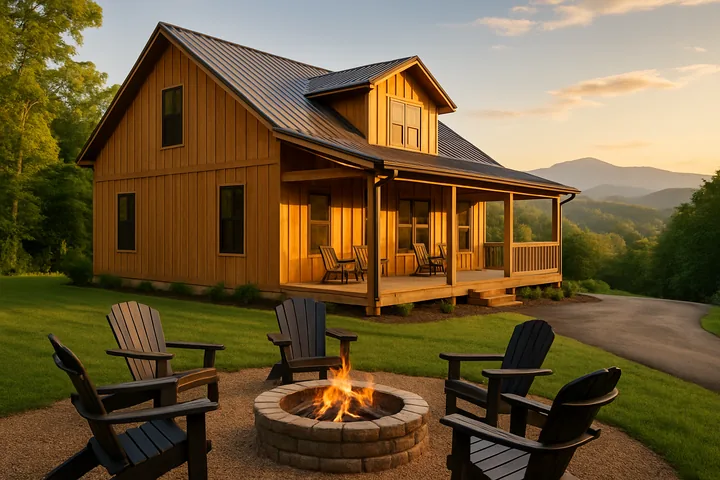
Illustrative downtown Gatlinburg cabin STR

Downtown Gatlinburg Cabin STR

$47,729
Year-1 federal savings @ 37% bracket, 100% bonus
Purchase price$625,000
Depreciable basis$497,062
Land allocation20.5%
5-year reclassified$96,164
15-year reclassified$30,319
Total reclass25.9%
Downtown Gatlinburg · SFR · STR · Built 2018
Illustrative Wears Valley new-build cabin

Wears Valley New-Build Cabin

$47,298
Year-1 federal savings @ 37% bracket, 100% bonus
Purchase price$595,000
Depreciable basis$470,645
Land allocation20.9%
5-year reclassified$96,176
15-year reclassified$28,846
Total reclass27.2%
Wears Valley · SFR · STR · Built 2021
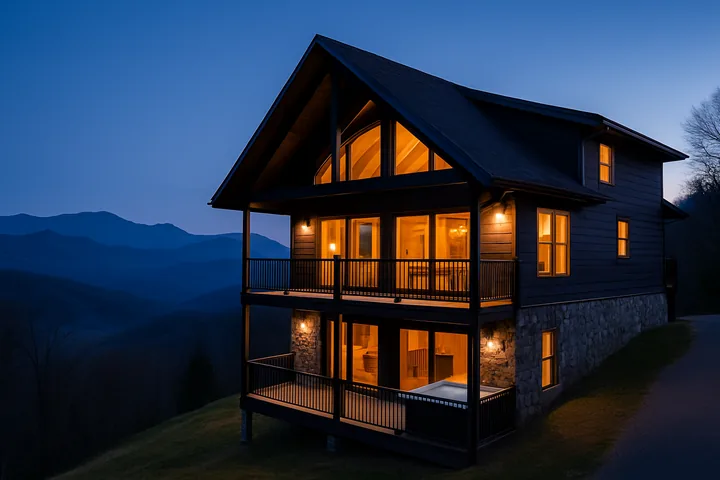
Illustrative Cobbly Nob luxury chalet near Gatlinburg

Cobbly Nob Luxury Chalet

$87,425
Year-1 federal savings @ 37% bracket, 100% bonus
Purchase price$1,100,000
Depreciable basis$876,700
Land allocation20.3%
5-year reclassified$176,821
15-year reclassified$54,467
Total reclass27.0%
Cobbly Nob / Chalet Village · SFR · STR · Built 2015
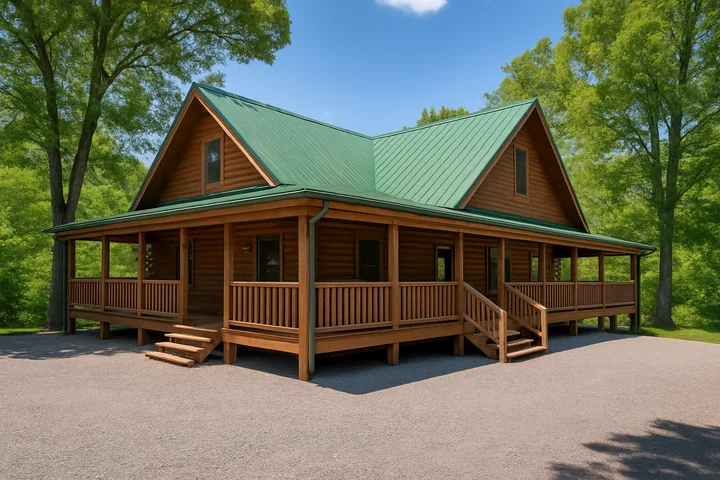
Illustrative Sevierville family-size cabin

Sevierville Family Cabin

$38,495
Year-1 federal savings @ 37% bracket, 100% bonus
Purchase price$485,000
Depreciable basis$389,261
Land allocation19.7%
5-year reclassified$77,970
15-year reclassified$23,733
Total reclass26.7%
Sevierville (Pigeon Forge corridor) · SFR · STR · Built 2019
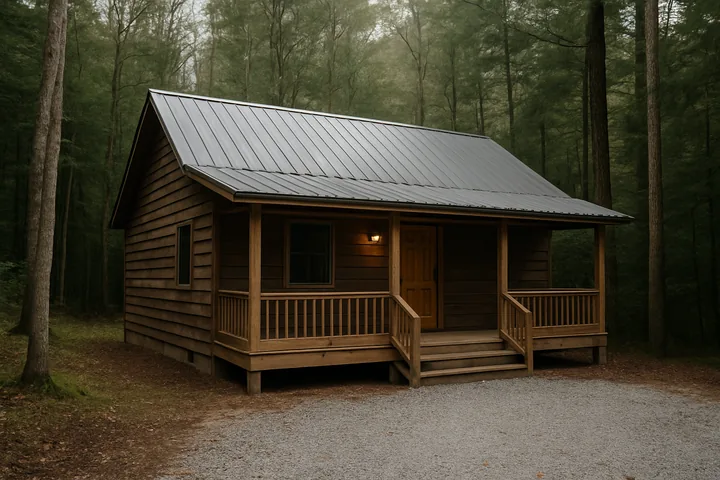
Illustrative Cosby Tennessee long-term-rental cabin

Cosby LTR Cabin

$19,840
Year-1 federal savings @ 37% bracket, 100% bonus
Purchase price$385,000
Depreciable basis$307,346
Land allocation20.2%
5-year reclassified$32,183
15-year reclassified$21,438
Total reclass17.4%
Cosby / Newport (east of Gatlinburg) · SFR · Built 2010

Deep dive on each example →

Gatlinburg neighborhood profiles

Cost-seg ROI varies more by neighborhood than by city. Gatlinburg's 5 sub-markets each have their own land-allocation pattern and property archetype:

NeighborhoodTypical valueTypical land allocationProfile note
Downtown Gatlinburg $625,000 ~24% Walkable resort core. Higher-density condo and small SFR. Within city limits — subject to Gatlinburg STR ordinance and city permit. Lower land allocation due to vertical-density mix.
Wears Valley $595,000 ~22% Newer cabin development corridor (Highway 321 north toward Pigeon Forge). Heavily developed STR product, newer builds dominate. Sevier County (not Gatlinburg city limits) — permit-lighter.
Cobbly Nob / Chalet Village $825,000 ~28% Luxury chalet sub-markets with mountain views and gated/HOA infrastructure. Higher land allocation due to view premiums. Multi-bedroom STR product targeting family bookings.
Sevierville (Pigeon Forge corridor) $485,000 ~20% Lower-elevation cabin product north of Pigeon Forge. Lower land allocation. Strong STR demand from Dollywood / Tanger Outlets traffic but lower ADR than Gatlinburg proper.
Cosby / Newport (east of Gatlinburg) $415,000 ~18% Off-the-beaten-path cabin market east of Gatlinburg. Lowest entry pricing, lower land allocation, weaker STR demand profile. Often a long-term-rental crossover market.

Methodology note: "Typical land allocation" reflects baseline patterns for the sub-market. For ultra-premium or resort-tier inventory where reconstruction cost exceeds 2.0× the implied depreciable basis after subtracting baseline land, the engine applies a premium land floor (~50%) to keep the study within audit-defensible territory. This means individual fixture engine output may exceed the neighborhood typical — especially for resort-tier ski-in/ski-out, beachfront, or view-premium product where land scarcity dominates value. See the /data/ page for per-fixture land-source attribution. Results vary substantially by specific property condition, renovation history, and assessor records.

Regulatory context

Sevier County vs City of Gatlinburg permitting are distinct regimes. Properties within Gatlinburg city limits are subject to the City of Gatlinburg's short-term rental ordinance, including residential-zone permit requirements and density rules. Properties in unincorporated Sevier County (Wears Valley, Cobbly Nob, Sevierville-adjacent) are subject to lighter county-level permitting and generally more permissive. STR-intent buyers should verify a property's jurisdiction before underwriting hold-period assumptions. Material participation under §469 is achievable for portfolio operators who self-coordinate cleaning, booking, and maintenance — but most Sevier County owners use professional management (American Patriot Getaways, Cabins USA, Smoky Mountain Rentals), and the >100-hour-and-more-than-anyone test usually fails when a manager runs operations. Our advisory ranges assume conservative 5-year hold-period profiles unless self-management is documented.

For the full IRS-rule reference layer (§168(k), §469 material participation, state conformity), see irsdepreciationrules.com — our open reference site.

Gatlinburg cost segregation FAQ

Why are Gatlinburg cabin reclassification ratios higher than the national STR average?

Three factors compound. First, furnished Smokies cabins carry unusually high FF&E density per square foot — the typical Gatlinburg STR product has sleeps-10+ layouts with multiple hot tubs, game rooms, themed décor, smart-home tech, and full secondary kitchens. All of that 5-year personal property. Second, the post-2015 cabin construction cohort that dominates the new-build market (Wears Valley especially) has substantial 15-year land improvements baked in — graded sites, gravel drives, deck systems, fire pits, retaining walls, hardscape. Third, RSMeans 2024 base costs for the Smokies region don't require heavy PPI back-adjustment for these recent builds — the engine's cost-reconciliation produces clean A-band fits more often than in older-stock markets. Engine median for Gatlinburg 5-fixture runs comes in around 24–28% reclass, vs 18–22% national STR median.

Does Tennessee having no state income tax change the cost-seg study itself?

It doesn't change the study's component classification, MACRS recovery period assignment, or land allocation methodology. What it changes is the after-tax math you do on top of the study. In states that conform to federal §168(k) (Utah, Colorado), your accelerated depreciation reduces federal and state liability in the same year. In states that decouple (California, NY in some cases), there's a state-side addback that reduces the headline figure. In Tennessee — and Florida, Texas, Nevada, Washington, Wyoming, South Dakota, Alaska — there's no state income tax to begin with, so the federal deduction is the entire tax story. Gatlinburg cabin owners get the cleanest version of the cost-seg math possible.

What's the difference between buying inside Gatlinburg city limits vs unincorporated Sevier County?

Two practical differences. (1) Permitting: Gatlinburg city limits have a stricter STR ordinance with residential-zone permits, density rules, and renewal-tied compliance — Sevier County unincorporated areas (Wears Valley, Cobbly Nob, Sevierville-adjacent) have lighter regulation. (2) ADR: Gatlinburg city-limits properties typically command higher average daily rates because of walkability to downtown attractions; Wears Valley and Cobbly Nob trade on the cabin experience and the mountain-view premium. Cost segregation works the same way on both — there's no city-vs-county engine differential. But hold-period assumptions should be tighter for city-limit properties given the regulatory tighter regime.

Is the §469 material participation test achievable for a Gatlinburg cabin?

Achievable but not automatic. The IRS test requires average customer use under 7 days (which Gatlinburg STR overwhelmingly satisfies) and material participation — typically >100 hours of active operations and more than any other person. For a single-cabin owner using a full-service manager like Cabins USA or Smoky Mountain Rentals, the manager will spend more time than you do, and the test usually fails. For portfolio operators with 3+ cabins who self-coordinate (centralized cleaning vendors, owner-direct booking via Hospitable or OwnerRez, owner-managed maintenance), the test is more achievable. Document hours contemporaneously — time-tracking apps work fine — because the IRS examination on §469 is records-driven.

How do Wears Valley new-builds compare to Cobbly Nob luxury chalets for cost-seg ROI?

Different shapes. Wears Valley new-builds (2018–2022 vintage, $500K–$700K price band) produce the best reclassification-as-percent-of-purchase because land allocation is low (~22%) and post-2015 construction has higher land-improvement density baked in. Cobbly Nob luxury chalets ($900K–$1.5M+) produce larger absolute dollar deductions because the basis is bigger, even though land allocation runs higher (28–32% — the view-premium effect). For a buyer optimizing for cost-seg ROI per dollar of basis, Wears Valley wins. For a buyer optimizing for absolute dollar deduction, Cobbly Nob wins. Most buyers should optimize on operating economics first (ADR × occupancy net of management fees) and let cost seg follow.

More general cost-seg questions answered at costsegsmart.com/faq/.

Ready to run your Gatlinburg study?

Cost Seg Smart studies are IRS-aligned, engineering-reviewed, and include written audit defense. Pricing is transparent and starts at $495 for residential properties under $300K — full pricing on the main site.